[Poor Construction 'Out'] ③ Repeated 'Poor Supervision'... Proper Pricing Needed for Remicon
Korean Institute of Construction Engineering Proposes 'Material Inspection Introduction'
Ready-Mixed Concrete Prices at Half the Level of Overseas
As concerns about the management and supervision of substandard buildings arise, interest in the supervision system is also growing. ‘Poor supervision’ has been cited as a reason for apartment construction site collapses occurring from last year into this year.
Types of supervision in Korea include ‘Construction Project Management’ in the public sector under the Construction Technology Promotion Act, and ‘Construction Supervision’ and ‘Housing Supervision’ in the private sector under the Architecture Act and Housing Act. Supervision must be capable of managing and overseeing all areas such as design, construction, quality, and safety, and must be able to demand corrective actions based on appropriateness.

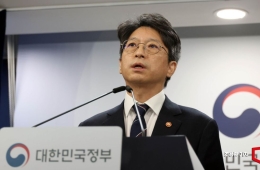
Hong Geon-ho, Chairman of the Construction Accident Investigation Committee (Professor at Hoseo University), is announcing the special inspection and committee investigation results of the Incheon Geomdan apartment underground parking lot collapse accident at the Government Sejong Complex on July 5.
[Photo by Yonhap News]
However, the industry views it as practically difficult for supervisors to possess advanced expertise and applied skills based on extensive practical experience across all architectural fields. In Korea’s architectural sector, there are nationally recognized professional qualifications such as ‘Architect’ for design, ‘Architectural Structural Engineer’ for structures, ‘Architectural Construction Engineer’ for construction, ‘Architectural Quality Testing Engineer’ for quality, and ‘Construction Safety Engineer’ for safety, making it challenging for one supervisor to hold all these qualifications.
Therefore, there are calls for enhancing specialization in supervision tasks. The Korean Institute of Architectural Construction recently emphasized the ‘introduction of material supervision’ in its report on ‘Improvement Directions for Construction Structure Safety.’ This is to fundamentally block the use of defective materials, which is cited as one of the main causes whenever structural safety accidents occur. According to the ‘Incheon Geomdan AA13-1BL, 2BL Detailed Safety Diagnosis Report’ received by Representative Heo Jong-sik of the Democratic Party from the Korea Land and Housing Corporation (LH) on the 16th, uncertified recycled aggregate was used as raw material for ready-mixed concrete during construction. This led to a reduction in concrete compressive strength, and among 17 residential buildings, 3 received a ‘Safety Evaluation Grade D,’ equivalent to reconstruction level. The Korean Institute of Architectural Construction holds the position that through material supervision, it should be possible to manage all aspects of concrete raw materials, production, and construction, and to individually review the appropriateness of raw material quality, concrete mix, and strength.
The Aggregate Industry Research Institute voices the need to introduce fair and appropriate pricing for ready-mixed concrete to prevent substandard buildings. The domestic ready-mixed concrete industry is experiencing excessive competition and low-price bidding (dumping) due to oversupply, so structural solutions to secure quality are necessary. They also argue that domestic ready-mixed concrete prices, which are only about half those of other countries, should be reasonably adjusted. According to the Aggregate Industry Research Institute, the average price per cubic meter of ready-mixed concrete is 267,000 KRW in Japan, 250,000 KRW in Germany, 217,600 KRW in the United States, and 187,000 KRW in the United Kingdom, compared to 95,000 KRW domestically. The institute explains, “Ready-mixed concrete is not a simple consumer good but a public material directly related to the lives and safety of the people, so the ready-mixed concrete industry needs to establish a pricing system that guarantees safety and quality.”
Hot Picks Today
 "Two Spend 500,000 Won in a Flash, Yet Wait Two Hours?" ... 'Dreamland' Shunned by Kids and Foreign Tourists
- The Era of Getting 200 Million Won After 30 Years Is Over... A Japanese Bank's "Perpetual Department Head" Who Just Clocked In Cries Out
- "Teacher by Day, Adult Film Star by Night": Bizarre Excuse... Japanese School Rocked by Tip About Porn Video
- "'27 Trillion Won' Czech Nuclear Plant Construction Contract Talks Collapse; KHNP Parts Ways with Daewoo-Doosan Consortium (Roundup)"
- [Exclusive] "I Was Lured by Gangnam Unni's Coupons"... Behind Glamorous 'K-Beauty,' Complaints About Cosmetic Procedures Surge 38%
The industry ultimately analyzes that government or related institutions must intervene. They argue that the government, national institutions, or organizations such as the Korean Concrete Institute should periodically announce minimum prices that ensure safety and quality by evaluating the appropriateness of ready-mixed concrete prices. Establishing a Ready-Mixed Concrete Fair Price Review Committee under the Ministry of Land, Infrastructure and Transport to determine appropriate fair prices is also seen as one possible approach.
© The Asia Business Daily. All rights reserved. Unauthorized AI training and use prohibited.