Return traffic peak at 4 PM... Busan to Seoul takes 6 hours 10 minutes
Peak at 4-5 PM
Resolved by 1-2 AM the next day
The day after Chuseok, on the 30th, a stream of returning travelers is expected to continue from the morning, with severe congestion anticipated on roads heading toward Seoul until around midnight.
According to the Korea Expressway Corporation, as of 9 a.m. that day, the estimated travel times by passenger car from regional toll gates to the Seoul toll gate are 6 hours 10 minutes from Busan, 5 hours 31 minutes from Ulsan, 5 hours 10 minutes from Mokpo, 5 hours from Gwangju, 4 hours 51 minutes from Daegu, 3 hours from Gangneung, and 2 hours 4 minutes from Daejeon.

On the Gyeongbu Expressway heading toward Busan, congestion continues over a 3 km stretch from Jamwon to Seocho, a 14 km stretch near Dongtan Junction to near Namsa, and a 9 km stretch from Manghyang Rest Area to Cheonan Junction. On the Seohaean Expressway heading toward Mokpo, vehicles are repeatedly stopping and starting over 9 km stretches near Bibong to Hwaseong Rest Area and near Seopyeongtaek to Seohae Bridge.
On the Jungbu Expressway heading toward Namyi, congestion is occurring over a 2 km stretch from Hobeop Junction to near Moga. On the Yeongdong Line heading toward Gangneung, traffic flow is slow over 7 km from near Icheon to Yeoju Junction, 6 km from Yongin to Yangji Tunnel, and 5 km from near Maseong Tunnel to Yongin.
The Expressway Corporation expects heavy congestion in the returning direction but anticipates it will not be as severe as the previous day.
In the outbound direction, congestion is expected to start between 6 and 7 a.m., peak between 11 a.m. and 12 p.m., and ease between 9 and 10 p.m. In the returning direction, congestion starting between 7 and 8 a.m. is expected to peak between 4 and 5 p.m. and clear between 1 and 2 a.m. the following day.
Hot Picks Today
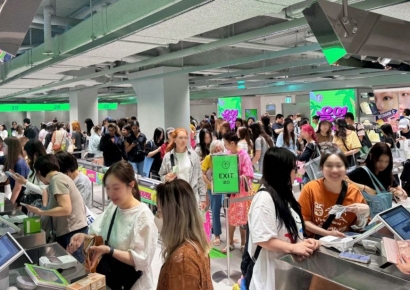 "She Comes Every Three Months to Stock Up"... Surge of Foreign Visitors Entering Korea for Olive Young Sale
- Still Buying and Selling Based on Price? Rich Dad Says That's a Mistake... "I'll Soon Be Buying This"
- "Let's Be Friends Even Longer in the Next Life"... Tearful 49th-Day Memorial Held for the Late Lee Chaewon
- "Forced to Pay 500,000 Won for Team Lunches in a Week"... Company Culture Drives New Employee to Quit, Sparks Outcry
- [Report] "Chicken and Cola for 3,000~15,000 Won" Draws Opening Crowd... Surging in Popularity After Leaving the Freezer
The expected traffic volume nationwide is estimated at 5.42 million vehicles. It is predicted that 400,000 vehicles will move from the metropolitan area to local regions, and 520,000 vehicles will move from local regions to the metropolitan area.
© The Asia Business Daily(www.asiae.co.kr). All rights reserved.