[Jjinbit] "The Future of Work's Key Word is Conflict... Productivity Must Be Increased by Collaborating with Machines" [Office Shift] (38)
Interview with 'Futurist' Seo Yongseok, KAIST Professor
Discusses Challenges Such as Gaps Between Companies When Introducing Technology

Smartphones are now a "must-have" for modern office workers. Not only can they make calls and check emails and messages outside the office, but even complex work tasks can be handled using a smartphone alone. With just a smartphone, one can essentially manage the majority of work, even without a computer on an office desk or a laptop in a bag. Smartphones have become indispensable not only in daily life but also in the workplace.
This change has taken place over the past decade. According to the Korea Communications Commission, as recently as 2013, 2 out of every 3 people in Korea believed they could manage their daily lives without a smartphone. However, over just ten years, that percentage has been halved to 30%. Now, 7 out of 10 people feel they cannot get by without a smartphone in everyday life. In particular, 90% of people in their teens through their 40s say they cannot imagine life without a smartphone.
As technology evolves, not only daily life but also the work environment transforms rapidly. In an interview with The Asia Business Daily on August 23, futurist Yongseok Seo, Professor at the Korea Advanced Institute of Science and Technology (KAIST) and Director of the MoonSool Graduate School of Future Strategy Center, stated, "Perhaps the greatest change we've experienced in the past ten years has been the transformation in the way we work." He pointed out that "the primary driving force behind this change is technological advancement" and predicted that the surge in generative artificial intelligence (AI) technologies this year could fundamentally change the way we work once again.

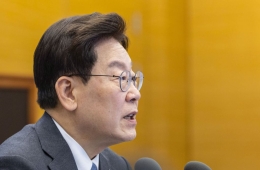
Yongseok Seo, Professor at the Korea Advanced Institute of Science and Technology (KAIST) and Director of the MoonSoul Graduate School of Future Strategy Center
View original imageProfessor Seo was the first Korean student of the renowned futurist Jim Dator, Professor at the University of Hawaii and former president of the World Futures Studies Federation (WFSF). He specializes in futures studies and sociology of social change. He is also currently writing a book tentatively entitled "The Future of Work and Jobs," which analyzes the effects of changes in technology, demography, and climate on our jobs and professions. He was asked about how the nature of work and ways of carrying out work might change in the aftermath of COVID-19.
◆ "From Now On, Human-machine VS Human-machine Teams... Four-day Workweek Is the Mainstream"
Professor Seo stressed that collaboration between workers and technology will be crucial for the future work environment. He predicted that how employees collaborate with technology will dramatically reshape the way work is done. His answer came amid heightened fears about job losses due to the AI boom and the general apprehension toward machines and technological advancements in the workplace.
"Workers are collaborating with technology and machines much more than before. Just as computers, the internet, and smartphones changed things in the past, continued collaboration with technology and machines will dramatically reshape how we work."
Remote work, introduced widely during COVID-19, is a prime example of how the collaboration between employees and technology helped workers overcome a crisis. At that time, companies and employees worldwide were able to remain connected via laptops, the internet, messengers, and video conferencing, without having to physically gather in one place. When asked what had changed the most in the work environment following the COVID-19 pandemic, Professor Seo replied as follows:
"At first, many people found remote work, classes, and meetings difficult, but there has been a growing realization that 'It was surprisingly doable.' Previously, remote work or working from home simply felt unfamiliar. Although COVID-19 has ended, many meetings and classes are still held online. It saves both time and money, and people feel comfortable with these new formats."
This means the psychological barrier to remote work has been broken. The technology that has permeated the workplace is now becoming established, changing companies' and workers' perceptions and the way we work. Professor Seo also discussed how we should respond to these ongoing changes going forward.

"Technological advances will not only change the way we work but also have a profound impact on labor and employment. Simple, repetitive tasks will inevitably be replaced by machines or technology. Advances in technology have always created new jobs and ecosystems, while also replacing some existing jobs.
The most important thing is for humans and technology to work together to enhance productivity. Rather than seeing machines as competitors, we should be thinking about how to collaborate with them. In the future, society will not be about humans versus machines, but rather human-machine teams competing against other human-machine teams. Ultimately, technology and machines are just tools, so humans need to leverage them to increase productivity."
Professor Seo also said that if the adoption of technology and machines increases productivity, the introduction of a four-day workweek is no longer a distant possibility. Just as global workers used to work six days and 56 hours per week until the end of World War I in 1918, but now work five days and take weekends off, the same change could happen again. When Korea switched to a five-day workweek some 20 years ago, fears of economic damage were widespread, but eventually the 40-hour, five-day workweek became the norm.
"It seems clear that the four-day workweek is becoming the mainstream. Technological advances are expected to significantly reduce the amount of time humans need to work. Even if people work less, productivity may remain the same or even rise through collaboration with technology, meaning a four-day workweek could match or exceed the productivity of five days. If that's the case, is there any need to stick to a five-day workweek?"
◆ Numerous Challenges for Bridging the Technology Divide..."Easing Conflicts Is Critical"
Professor Seo anticipates that while technological progress will soon transform the workplace and how we work, the process of introducing new technologies to the workplace will create various issues. These are challenges that society needs to address. He expressed particular concern about the gap between large corporations and small or micro-sized enterprises when it comes to embracing technology.
"There will be a clear difference between large companies, which have the capacity and capital to actively embrace technological innovation, and small businesses or self-employed entrepreneurs who do not. Many small businesses and micro-sized entities still rely on human labor. There are also many sectors where collaboration with machines is not possible. If a four-day workweek were mandated for such companies, it could severely impact their revenue and profits. This could lead not only to conflicts between employers and employees, but also to disputes between small businesses and the government."

Professor Seo explained that in factories in provinces where small businesses and self-employed entrepreneurs are prevalent, there are difficulties in recruiting young workers and the proportion of foreign workers is high. He also expressed concern that such businesses often lack the capital and know-how to introduce technological solutions or machinery. If a four-day workweek is implemented legally and institutionally in these companies, it would be inevitable to encounter significant difficulties.
Securing a workforce capable of handling technology and machines is another challenge. While understanding and applying technology is closely tied to productivity, there remains a shortage of skilled workers in this area. Professor Seo emphasized the need to build an educational system to prepare for the increasing role of technology in the work environment.
"Compared to the speed of technological development, human proficiency in understanding and mastering technology—and the educational systems to support it—are lagging behind. Many people are falling behind because they have failed to keep up with technology, resulting in widening income gaps. In reality, only a limited number of people can fully utilize cutting-edge tools such as AI, big data, and cloud platforms. As a result, companies are unable to find the talent they need, while governments struggle with chronic unemployment problems."
For these reasons, Professor Seo believes that the process of building new work environments and ways of working will not be smooth. When asked what value should be at the heart of shaping the future of work, he answered 'conflict.'
Related Articles
 [Jjinbit] "A Work System That Finds Meaning in Work Is Important... AI Could Help Introduce a 3-Day Workweek" [Office Shift] (37)
"The future of work will be shaped by technology. In this process, numerous interests will clash and conflicts will inevitably arise. The key word in creating the future of work is, ultimately, conflict. What matters is how to anticipate, mitigate, and manage those conflicts. Being proactive in predicting and easing conflicts will help ensure a relatively smooth transition."
© The Asia Business Daily. All rights reserved. Unauthorized AI training and use prohibited.