"Taking the Road Less Traveled" Hyundai Motor's Structural Reform, How Far Has It Come?
Hyundai Motor Group, Structural Reform to Leap as a First Mover
Universal Mobility for Everyone
Advanced Technology Research Institute Studies Early-Stage Technologies to Change the Future
Zero1 Connects Early Ideas to Foster Startups
World's No.1 Hydrogen Vehicle, Leading Commercial and High-Performance Cars
In September 2018, Chung Eui-sun, then Vice Chairman of Hyundai Motor Group, took on the role of Senior Vice Chairman and stepped to the forefront of group management. Five years later, the domestic and international business environment and the internal and external company circumstances have changed considerably. After a few months of intensive study following his appointment as Senior Vice Chairman, the theme he presented at the New Year's ceremony he presided over early the following year was 'game changer.' He foresaw a distinctly different market unfolding and the need for new rules. We examined how Hyundai Motor Group's organizational reform is progressing.

"Can we create navigation for the visually impaired?" Sometimes, an unconventional idea advances the world by a step. The concern for equal mobility rights for all has been layered with various ideas, leading to the development of an autonomous wheelchair. This is a product that emerged through Zero1, Hyundai Motor Group's open innovation platform. Considering that existing electric wheelchairs are heavy and cannot be loaded onto airplanes, motors were attached to each foldable wheelchair wheel to reduce weight. The developers reflected the opinion that people with disabilities should experience minimal inconvenience when traveling overseas.
The real-life version of the AI car kit featured in the foreign drama "Knight Rider" is not just a story of the distant future. At the company's Advanced Technology Research Center, technology is being developed where vehicles recognize passengers' emotions and respond automatically. Currently, sensors detect the driver's pupil position or biometric signals such as brainwaves to provide alerts. Expanding on this, the system monitors various biometric signals and subtle changes in driving patterns to detect emotional states and activates necessary vehicle functions accordingly.
![Hyundai Motor employees participating in the autonomous electric wheelchair project for people with disabilities. The main content of the project, conducted in collaboration with UNDP, is featured in the documentary film 'for Tomorrow.' <br>[Photo by Hyundai Motor Group]](http://www.asiae.co.kr/news/img_view.htm?img=2023081606562340713_1692136584.jpg)
Hyundai Motor employees participating in the autonomous electric wheelchair project for people with disabilities. The main content of the project, conducted in collaboration with UNDP, is featured in the documentary film 'for Tomorrow.'
[Photo by Hyundai Motor Group]
"Not a follower but a leader" The reason for encouraging new attempts
Competing and performing well in the market against companies with over 100 years of history or advanced technology is no easy feat. Pioneering new paths that no one has taken is an even greater challenge. The background for Hyundai Motor Group operating Zero1 and the goals pursued through the Advanced Technology Research Center largely aim to cultivate an attitude as a game changer. When manufacturing internal combustion engine vehicles, it was sufficient to follow or refine the methods used by German, American, and Japanese makers. But will the same approach work in the future mobility market, represented by electrification and autonomous driving?
Chairman Chung judged that it would not. Since no one has taken a clear lead, he believed it was entirely possible. He thought it necessary to challenge what no one else has attempted and to consider issues others have not addressed first. Professor Lee Moo-won of Yonsei University explained in a case study published last year, "The follower attitude was a crucial driving force in Hyundai Motor Group's early success," adding, "Chairman Chung Eui-sun emphasized that the group's core goal is to leap from being a follower to a 'game changer' who can even adjust market rules."
One of the first things Chairman Chung did after becoming group chairman was to establish the Advanced Technology Research Center in Pangyo under his direct supervision. The organization, which started with about 30 to 40 members in early 2021, has now grown to around 150. It plans to expand to about 300 by next year. While the Namyang Research Center is the cradle of research and development for technologies necessary to actually build cars, and the Uiwang Research Center serves as the brain for various new businesses such as robotics and UAM, the Advanced Technology Research Center plays a role in investigating and researching at an earlier stage.
![A Mobiltech representative who grew through Hyundai Motor's Zero1 Startup Incubation Program demonstrates immersive digital twin technology<br>[Photo by Hyundai Motor Group]](http://www.asiae.co.kr/news/img_view.htm?img=2023081607011840716_1692136879.jpg)
A Mobiltech representative who grew through Hyundai Motor's Zero1 Startup Incubation Program demonstrates immersive digital twin technology
[Photo by Hyundai Motor Group]
The organization is not divided by major or field but forms teams on a project basis, frequently mixing members. The recently disclosed advanced technologies such as self-healing polymer coatings, transparent solar cells, and pressure-sensitive materials are all part of advanced technologies being developed with the next-generation electrified vehicles in mind. Park Gun-hyuk, a senior researcher at Hyundai Motor, said, "We start investigations one step beyond what is needed to gauge how future technologies will evolve and what future society will require," adding, "While internal research teams decide on projects, committees including even first- and second-year new employees participate in deciding whether to proceed with projects."
While the Advanced Technology Research Center handles internal advanced technologies, external ideas are gathered through Zero1. The organization aims to be more of a creator than an engineer. Collaborating with external startups, it involves university students and experts from various fields in annual contests. No Gyu-seung, a team leader at Hyundai Motor Group, said, "As part of realizing mobility for all, we hold contests without restricting specific fields," adding, "Sometimes very absurd ideas come up, and we need to connect and refine those well."
World's No. 1 Hydrogen Vehicle, Leading Commercial and High-Performance Vehicles
The hydrogen-based powertrain, considered the ultimate eco-friendly vehicle of the future, is already regarded as a step ahead among global automakers in development and mass production stages. Hyundai holds the first mass production records for SUVs, large trucks, and buses, and has maintained the global market share lead for several years. This is partly because, except for a few makers, there are no other competitors yet. However, other makers such as Toyota, Honda, and BMW have announced they are releasing or developing hydrogen vehicles, chasing Hyundai. Toyota is reportedly considering hydrogen fuel cell models alongside electric and plug-in hybrid versions of the SUV Land Cruiser, mainly sold in the U.S.
Hyundai Motor Group began developing hydrogen utilization technology in 1998 and has released hydrogen fuel cell-based models since the early 2000s. The initially expensive fuel cell systems have steadily decreased in cost, with next-generation products aiming to reduce costs by more than 98% compared to existing ones. The group supplies hydrogen fuel cells to European commercial vehicle makers and started operating a fuel cell factory in Guangzhou, China, this year. It also plans to sell hydrogen trucks in the U.S. starting this year. Collaborations are increasing in non-automotive fields such as ships, aviation, and power generation.
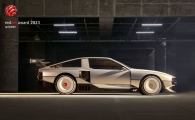
The group is also prominent in the high-performance electrification field. Technologies for high-performance electrified vehicles are concentrated in the rolling lab N Vision 74 and the RN22e. The thermal management system and sound system of Hyundai's high-performance electric vehicle Ioniq 5 N, set to launch next month, are results of this research. These are technologies that other makers have not been able to mass-produce at competitive prices. No other company besides Hyundai Motor Group has even released a prototype of a high-performance hydrogen vehicle.
Experts diagnose that the management environment is challenging as competition among companies has greatly increased in areas surrounding future mobility such as electrification, autonomous driving, and software. Lee Hyun-soon, a former head of Hyundai Motor's R&D division and current advisor at Doosan Group, said, "While Hyundai Motor Group can hold the overall R&D concept, it is practically impossible to have all the specialized talents in each field and sector within the group." He added, "Since there are several domestic companies with competitiveness in sectors like semiconductors and automotive electronics, Hyundai should build alliances or more actively adopt open innovation platforms that facilitate external technology acquisition."
© The Asia Business Daily(www.asiae.co.kr). All rights reserved.