Promotion of Tariff Quotas on Pork and Mackerel, Improvement of Eco-friendly and Chemical Substance Regulations

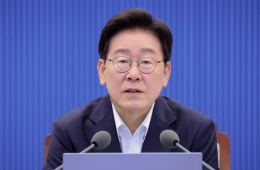
Bang Gi-seon, Vice Minister of Strategy and Finance, is delivering a welcoming speech at the "24th Emergency Economic Vice Ministers' Meeting and 8th Economic Regulation Innovation TF General Meeting" held on the 26th at the Government Seoul Office in Jongno-gu, Seoul.
View original imageThe government will apply tariff quotas to items facing supply shortages and price increases in order to stabilize prices. Additionally, regulations on eco-friendly power generation projects will be eased, and regulations in the chemical substances sector will be rationalized.
On the 26th, Bang Gi-seon, the 1st Vice Minister of the Ministry of Economy and Finance, stated at an emergency economic vice ministerial meeting held at the government complex in Jongno-gu, Seoul, “There are persistent price instability factors for certain agricultural, livestock, and fishery products directly linked to perceived inflation,” adding, “We will prepare supply and demand response measures by item to induce price stabilization.”
The government plans to implement tariff quotas of 45,000 tons for pork and 10,000 tons for mackerel, which are expected to face supply shortages in the second half of the year. For ginger, which is showing strong price trends, the government intends to increase the tariff-rate quota (TRQ) volume to circulate it in the market until the domestic harvest season. For beef, whose prices are fluctuating due to foot-and-mouth disease, price stabilization will be induced through discount events and disclosure of sales prices. For raw sugar and sugar, whose international prices have risen, tariff quotas will be pursued to support reducing the industry's burden.
At the economic regulatory innovation task force meeting held alongside the vice ministerial meeting, the 5th economic regulatory innovation plan was also prepared. To expand participation in RE100 and achieve carbon neutrality goals, the government will address corporate difficulties in offshore wind and renewable energy power generation projects. Procedures for bonded factory permits, semi-import/export, and origin certification will be omitted or simplified to reduce companies’ time and cost burdens. In the chemical substances sector, the qualification standards for management technical personnel will be rationalized, and improvements to the mandatory installation of ventilation facilities will also be reviewed.
Hot Picks Today
![[Test Drive] The Sealion 7 Transformed by a 2 Million Won Upgrade: "Base Model Buyers Might Feel Shortchanged"](https://cwcontent.asiae.co.kr/asiaresize/93/2026080417033869589_1785830618.jpg) [Test Drive] The Sealion 7 Transformed by a 2 Million Won Upgrade: "Base Model Buyers Might Feel Shortchanged"
[Test Drive] The Sealion 7 Transformed by a 2 Million Won Upgrade: "Base Model Buyers Might Feel Shortchanged"
- 'Single-Stock Leveraged ETF Blow' Crippled KOSDAQ in July... Hopes Rise for a Turnaround in August with 11.38% Surge [Weekend Money]
- Chinese Buyers Retreat from Seoul’s Real Estate Market? Foreign Purchases Plummet by 2,000 [Real Estate AtoZ]
- "If We Don't Get Married, Let's Live Together"... Gen Z Chooses 'Co-Buying Homes with Friends' Over Romantic Partners [Gen Z Around the World]
- Kim Seontae Appears Gaunt After Leaving 'Don Seontae'... 3,000 Thumbs Up for Chungju Mayor's "Come Back" Offer
The plan is scheduled to be announced next week at the 7th Economic Regulatory Innovation TF meeting chaired by Deputy Prime Minister and Minister of Economy and Finance Choo Kyung-ho.
© The Asia Business Daily. All rights reserved. Unauthorized AI training and use prohibited.


!["Even a 500 Million Won Jump Is Fine, Self-Residence Buyers Flock to Billion-Won Units"...High Winning Bids Continue for Mid- and Low-Priced Reconstruction Complexes [Real Estate AtoZ]](https://cwcontent.asiae.co.kr/asiaresize/307/2026042709001641074_1777248016.jpg)