Metaverse Escapes Regulatory Risks... Game Discrimination Remains a Challenge

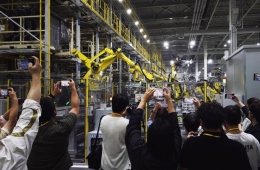
Prime Minister Han Duck-soo is looking at a video with attendees at the 1st National Data Policy Committee and inauguration ceremony held on the 14th at LG Science Park in Gangseo-gu, Seoul. Photo by Hyunmin Kim kimhyun81@
View original image[Asia Economy Reporter Kang Nahum] The national data policy control tower, the ‘National Data Policy Committee,’ is actively working to distinguish between games and platforms in the metaverse, and it is expected that the metaverse will be freed from the risk of ‘game regulation.’ However, issues such as preferential treatment controversies for certain companies and reverse discrimination against massively multiplayer online role-playing games (MMORPGs), which are technically very similar to the metaverse, remain challenges to be addressed.
◆ National Data Policy Committee moves to improve metaverse regulations = According to the related industry on the 16th, the ‘National Data Policy Committee,’ which officially launched on the 14th as the national data policy control tower, has decided to improve regulations to foster new businesses including the metaverse. The committee plans to create and distribute guidelines within the year to distinguish between games and the metaverse. For metaverse platforms used in international events such as the ‘2030 Busan Expo,’ even if they include game content, they will not be subject to rating classification.
This plan by the committee is because if metaverse platforms are subject to the same regulations as games, it would be impossible to implement key business models such as e-commerce and non-fungible tokens (NFTs) within the platform.
For example, Naver Z’s ‘Zepeto,’ the number one metaverse platform in Korea, has currencies such as ‘coins’ and ‘jams,’ and users must perform activities like completing quests to earn them. These currencies can be used to purchase in-app items or virtual items from companies operating within the platform.
These currencies can also be converted into cash. If Zepeto is classified as a game and the Game Rating and Administration Committee deems the cash conversion aspect as gambling, the domestic service itself could become impossible. The Game Industry Promotion Act prohibits exchanging tangible or intangible results obtained through game use for cash.
Since SK Telecom’s metaverse platform ‘Ifland’ and the soon-to-be-launched Com2uS’s ‘Com2Verse’ have similar business models, applying such game laws to each platform could hinder business expansion. An industry insider said, “It is necessary to focus on the purpose of the metaverse itself rather than the aspect of ‘play’ like games,” adding, “Tight regulations would be an obstacle to creators and users building the platform ecosystem and continuing creative activities within the metaverse.”

◆ Concerns over reverse discrimination in games = As the authorities move to improve regulations, companies operating metaverse businesses are increasingly hopeful that regulatory risks will be resolved. On the other hand, the game industry is concerned about reverse discrimination if strict regulations continue to apply only to MMORPGs compared to metaverse platforms.
MMORPG users set up virtual characters representing themselves and earn currencies by hunting and other activities within the game. The currencies earned in the game or NFT-ized characters are sometimes traded in the real world. Although ‘economic activities,’ considered an essential element of the metaverse, are already implemented in MMORPGs, there is concern that the perception of ‘games = gambling’ could cause disadvantages.
Play-to-Earn (P2E) games, which are attracting attention as new businesses, are also blocked by the Game Industry Promotion Act and cannot be serviced domestically. From the perspective of game companies that operate only game businesses and not metaverse businesses, there are criticisms that legal privileges are being granted only to companies operating metaverse businesses.
Hot Picks Today
!["Don't Use Chinese-Made Products": One U.S. Warning Triggers a 5 Trillion Won Jackpot for Korean Batteries [Weekend Money]](https://cwcontent.asiae.co.kr/asiaresize/93/2025121709393659037_1765931975.jpg) "Don't Use Chinese-Made Products": One U.S. Warning Triggers a 5 Trillion Won Jackpot for Korean Batteries [Weekend Money]
"Don't Use Chinese-Made Products": One U.S. Warning Triggers a 5 Trillion Won Jackpot for Korean Batteries [Weekend Money]
- "These Days, It Starts with a Video Introduction"... 2030 Generation Korean Men Struggling with Dating Flock to Japan
- "Dividend Payouts of 40 Million Won Before Their First Birthday"...'Baby Shareholders' Put Ordinary Workers at a Disadvantage
- "Planning a Trip to Japan?"... Accelerating Yen Strength [Weekend Money]
- Foreign Tourists Leave in Tears Praising Seoul: "Wi-Fi So Fast, My Fingers Can't Keep Up" [K-holic]
Kim Kyu-chul, chairman of the Game Rating and Administration Committee, recently said to reporters, “Games within the metaverse are clearly games, but if they are regulated under separate rules instead of the Game Industry Promotion Act, it could create many wrong precedents and issues.” An industry official expressed concern, saying, “There is a risk that companies might meet only the minimum requirements demanded by authorities and disguise their game business as ‘metaverse’ to circumvent regulations.”
© The Asia Business Daily. All rights reserved. Unauthorized AI training and use prohibited.