DawonSys Electric Vehicles to Run 'SsangSsang' on Seoul Subway in 2022
Dawonsys Secures Order for 298 Cars of Seoul Metro Lines 5 and 8 at Year-End, Solidifying Position as Leading Seoul Subway Rail Vehicle Manufacturer... Accelerates Development of Safe Subway Vehicles with 100% Precise Stopping Control Devices, Dual Collision Energy Absorption Systems, and Installation of CCTV in Passenger and Driver Compartments to Address Rising Sexual Harassment Cases

DawonSys is solidifying its position as a leading subway vehicle manufacturer following its order of 298 train cars for Lines 5 and 8, commissioned by Seoul Metro at the end of last year. The photo shows a bird's-eye view of DawonSys railway vehicles to be supplied for Line 5.
View original image[Asia Economy Reporter Park Jong-il] Dawonsys (Chairman Park Seon-soon) is powering ahead in 2022 with the Seoul Metropolitan Subway electric train cars it manufactured and supplied.
Dawonsys has solidified its status as a leading company in Seoul subway rail vehicles by securing an order for 298 cars for Lines 5 and 8 from Seoul Metro at the end of last year, significantly enhancing the company's growth potential.
In particular, it is accelerating the development of safe subway vehicles by installing a propulsion control device ensuring 100% precise stopping, a dual collision energy absorption device, and CCTV in passenger compartments and driver’s cabins to prepare for the surge in sexual harassment incidents inside compartments.
In September last year, Dawonsys supplied the first 6-car train set for Seoul Subway Line 2 to Seoul Metro.
The supplied train consists of 6 cars as a unit and is scheduled to operate on the branch section between Sindorim Station and Kkachisan Station on Line 2. This first 6-car set was part of the contract to supply 196 cars for Lines 2 and 3 with Seoul Metro and was the first delivery last year.
Besides the Line 2 trains, currently 11 train sets (110 cars) for Line 3 are undergoing test runs at the Jichuk and Suseo depots of Line 3, and are expected to be supplied soon after final testing. The remaining units are planned to be supplied sequentially by the first half of 2023.
The Line 2 and 3 trains for Seoul Metro were manufactured considering the underground section characteristics where many passengers board and alight during specific times, integrating with platform screen doors (PSD) at stations.
Since each subway line has a different signaling system, the train automatic control system/train protection (ATO/ATP) of Seoul Subway Line 2 and the automatic train control system (ATC) of Line 3 are linked with platform screen doors, enabling fine adjustment of train operation timing. This is expected to greatly improve operational efficiency, passenger convenience, and safety.
The newly manufactured Seoul Lines 2 and 3 trains feature enhanced safety devices and convenience facilities, especially in linkage with platform screen doors.
Chairman Park Seon-soon of Dawonsys said, "Following the order for 298 cars for Lines 5 and 8 from Seoul Metro last year, we will strive even harder to manufacture safer and more user-friendly rail vehicles, valuing life and enhancing our reputation as a trusted rail vehicle manufacturer with the safest, most comfortable, and excellent performance."
◇ Propulsion Control Device Ensuring 100% Precise Stopping (Inverter Device)
Among Dawonsys’s self-manufactured electronic components, the propulsion conversion control device (inverter) has demonstrated outstanding control technology on Seoul Subway Line 2. Line 2 is the busiest subway line in the world, transporting 1.58 million passengers daily and having the most crowded boarding and alighting.
The 200 cars supplied to Seoul Metro in 2018 for Line 2 achieved a perfect 100% stopping rate within ±35 cm of the boarding position center at 43 stations when entering platforms under automatic train operation (ATO). According to the Railway Safety Act, a stopping rate of 90% or higher is considered acceptable.
This result is due to the 'Zero Speed Regenerative Braking' technology developed by Dawonsys for the first time in Korea by improving the performance of power devices and control methods in the propulsion conversion control device (inverter). This technology maximizes electric regenerative braking while minimizing air braking when the train stops, theoretically maintaining 0 km/h speed, thus achieving a 100% precise stopping rate.
Conventional trains used air brakes that press brake pads against discs or wheels at low speeds near stations because precise regenerative braking was difficult at low speeds. Air brakes generate fine dust from pad wear, polluting tunnels, cause noise due to friction, and inconsistent deceleration leads to stopping errors.
The advantages of the Zero Speed Regenerative Braking method include greatly improved train operation efficiency and ride comfort, almost no brake pad usage reducing maintenance costs, significant reduction of dust and fine particles in tunnels, almost no stopping noise, and the ability to feed electrical energy back to the overhead line, improving energy efficiency.
◇ Dual Collision Energy Absorption Device
To ensure passenger and vehicle safety in case of train collisions or rear-end crashes, a world-class dual collision energy absorption device was designed and applied.
Upon collision, the impact energy is first absorbed by the rubber buffers and hydraulic buffers of the front coupler. When the absorbed energy exceeds 900 kN, the front coupler moves backward, activating the energy absorption device (CEM), which absorbs the collision energy primarily.
The remaining collision energy not absorbed is then absorbed secondarily by the anti-climber’s shock-absorbing material mounted at the front of the train, the rubber buffers of the intermediate coupler, and deformation tubes, completing the dual collision energy absorption structure.
Analysis of a collision scenario at 25 km/h for a Line 2 train set model predicts that the survival space for passengers and the driver’s cabin remains intact within the Railway Safety Act’s allowable limits, prioritizing life safety.
◇ Uninterruptible Wireless Broadcasting and Lighting Device
In 2014, a collision between trains at Sangwangsimni Station on Seoul Subway Line 2 injured about 90 passengers and hospitalized around 390. The train cars separated, cutting electrical connections, leaving passengers in darkness without emergency announcements, causing prolonged fear and anxiety.
To address this, Dawonsys designed and installed Korea’s first uninterruptible wireless broadcasting and lighting device in 2018 on Seoul Subway Line 2 trains.
This device supplies power from an internal emergency power source (battery) even if electrical supply is cut due to train separation, power outage, or collision during operation, enabling wireless emergency announcements and emergency lighting in the passenger compartment for at least one hour.
Thus, in emergencies where power is cut, crew members can provide emergency announcements and lighting, allowing passengers to evacuate safely and calmly.
◇ LED Safety Indicator Lights on Passenger Compartment Doors
LED safety indicator lights are installed on both sides of the passenger compartment doors’ pocket areas, displaying the door operation status with color-coded LEDs so passengers can visually recognize door opening and closing states during boarding and alighting.
For example, before the train stops at a station, the LED indicator flashes green during arrival announcements; when doors are opening or fully open, the LED stays green; when closing, it flashes yellow; and when fully closed, it turns off. In case of door malfunction or emergency, the indicator lights red.
This visual color indication helps prevent delays caused by passengers rushing to board or alight, and reduces injuries or property damage from being caught in doors.
◇ Emergency Escape Equipment in Passenger Compartments
In emergencies such as fire or collision, emergency escape equipment (emergency ladder) is installed at the end of passenger compartments to allow passengers to quickly exit besides the doors.
The ladder is stored in a compartment box; when deployed, passengers pull out the ladder, operate the emergency door lever on the compartment wall to manually open the door, hang the upper part of the ladder on the door sill, and place the lower part on the ground outside. The ladder is made of lightweight materials for easy installation by people of all ages.
◇ CCTV Installation in Passenger Compartments and Driver’s Cabins
Due to a surge in sexual harassment and assault incidents inside subway cars, CCTV cameras were installed on the compartment ceilings. CCTV was also installed in driver’s cabins to enable efficient response during vehicle malfunctions or emergencies under real-time monitoring by the central control center.
Additionally, fire detection sensors that detect heat and smoke were installed on compartment ceilings. When triggered, the fire detection control device in the driver’s cabin sounds an alarm and displays a “Fire Occurred” screen, with indicator lights on the affected vehicle, enabling early fire suppression.
As a result, crew members can monitor compartments in real time to prevent crimes and fires, and respond quickly to emergencies under central control center guidance, enhancing safety.
◇ Air Quality Improvement Device
Amid growing social concern over air pollution and fine dust, a new air quality improvement device capable of removing PM2.5 (particulate matter with diameter less than 2.5 micrometers) inside train compartments was applied. * 1 μm: one-thousandth of a millimeter (100 times smaller than a human hair thickness)
The device filters the entire compartment air every 12 minutes using dual filters: a pre-filter for general dust and a PM filter for fine particles, achieving over 99% efficiency in capturing PM2.5.
Tests conducted on the entire Line 2 showed an average fine dust reduction of 12.3% during rush hours, with up to 34% reduction at Sinchon Station, demonstrating excellent performance.
Separate air conditioning and air quality improvement devices were also designed for driver’s cabins to provide a comfortable environment for crew members to focus on driving.
◇ Wider Passenger Seats
Based on surveys of the gradually westernizing Korean standard body dimensions, seat arrangements were improved from 7 seats per row to 6, widening seat width to 480 mm and reducing discomfort from physical contact between passengers.
Additionally, transparent glass and stainless steel pillars were installed as seat partitions between door pillars and seats to prevent unnecessary physical contact between boarding/alighting passengers and seated passengers.

Dawonsys expects its semiconductor and display equipment, prepared over seven years through strong portfolio management, to become a new growth engine starting this year.
Alongside this, its subsidiary Dawon Medax’s BNCT (Boron Neutron Capture Therapy) cancer treatment system, a novel cancer therapy method, has successfully completed all preclinical trials and plans to begin clinical trials in May next year, heralding a revolutionary breakthrough in cancer treatment often called the dream cure.
Hot Picks Today
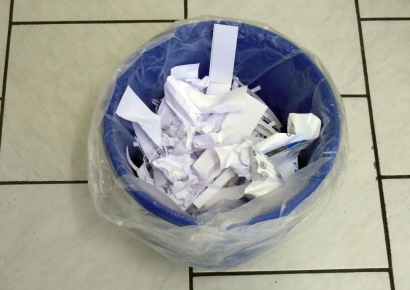 Ballot Box Found in Trash... Peru Holds Runoff Amid 'Ballot Shortage Crisis'
- "Brothers, You've Been Waiting for News?"... Orphanage Library Built Thanks to 'Money Brag' by SK hynix Employee
- Will 12.9 Million Exam Takers Rush for Better Scores? Expectations Run High
- "A Mother's Quick Reflexes Save Child from BRT Bus Rushing onto Sidewalk"
- "Click! Gotta Post on SNS"... 'Small Luxury' for 20s and 30s Cools Down Amid High Inflation
Also, Dawon Nexview, a subsidiary specializing in ultra-precision laser equipment, boasts world-class performance and competitiveness, achieving innovative progress in semiconductor equipment and precision IT markets such as smartphones. Together with its subsidiaries under the parent company Dawonsys, collectively called the Dawon Universe, they are driving robust growth through innovation as a strategic portfolio model.
© The Asia Business Daily(www.asiae.co.kr). All rights reserved.


!["Money Pit: Unstoppable Price Gouging at Golf Courses [Green Fee Price Shock]"](https://cwcontent.asiae.co.kr/asiaresize/307/2026060809323390802_1780878752.png)