Controversy Over Electric Vehicle Charging Speed and Capacity, Korea Has Solved It
Korea Research Institute of Standards and Science Develops World's First Large Direct Current Electrical Energy Standard
Verification Possible up to 500kW Fast Chargers

[Asia Economy Reporter Kim Bong-su] The Korea Research Institute of Standards and Science (KRISS) has developed the world's first standard capable of verifying the rapid charging performance of large-capacity (500 kW class) electric vehicle batteries.
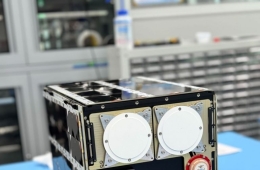
KRISS announced on the 14th that its Electromagnetic Standards Group has succeeded in developing a standard for large-current DC electric energy used in electric vehicle rapid charging, which can be used to calibrate rapid chargers up to 500 kW.
KRISS has already started calibration services for institutions such as the Korea Testing Laboratory, a national calibration testing agency. Through this, it is expected to secure overall reliability in the electric vehicle market by reducing measurement errors in rapid chargers and charging fee billing errors.
With the expansion of the electric vehicle market, verification of battery charging capacity, speed, and driving range has become a global concern. Electric vehicle manufacturers worldwide are developing rapid chargers capable of charging at 400 kW or more, but there has been no standard to ensure their reliability. Switzerland only provides standards up to 50 kW.
The KRISS Electromagnetic Standards Group, supported by the National Institute of Technology and Standards' Next-Generation Measurement Technology Development Project, succeeded in developing a 500 kW (1000 V x 500 A) class DC electric energy standard and has started calibration services. This 500 kW class DC electric energy standard is the first case established in the world. KRISS utilized its existing 'DC voltage and DC high-current measurement standards.' A virtual charger that outputs precise DC power is created, and the output values of this virtual charger and the charger under calibration are compared to evaluate errors. The uncertainty of the developed standard is 0.04% (k = 2).
Since 2020, DC electric energy meters included in legal measuring instruments must be periodically calibrated according to the Measurement Act. Testing and certification institutions such as the Korea Testing Laboratory must perform calibration of chargers using measuring instruments calibrated with national standards, and the standard developed by KRISS is expected to be used for calibrating these measuring instruments.
Hot Picks Today
!["Demand Is Soaring, but Supply Is Scarce"... Korean Component Makers Take Off as the Market Expands [Chip Talk]](https://cwcontent.asiae.co.kr/asiaresize/93/2026040311254913103_1775183149.jpg) "Demand Is Soaring, but Supply Is Scarce"... Ko...
"Demand Is Soaring, but Supply Is Scarce"... Ko...
Lee Hyung-gyu, head of the KRISS Electromagnetic Standards Group, said, “We take great pride in proactively responding to government and market demands with the large-current measurement technology that KRISS has accumulated,” adding, “It will help improve the reliability and quality of electric vehicle rapid chargers in the future.”
© The Asia Business Daily(www.asiae.co.kr). All rights reserved.