Suncheon City Apartments Require Additional Construction of 66,000 Units by 2030
Increase Housing Supply to Achieve a Self-Sufficient City of 340,000 Population by 2030
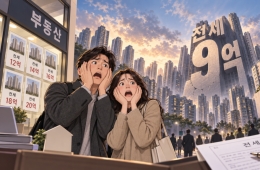
Supply Shortage Fuels Price Rise... Benefits Go to Developers and Speculators
Apartment Supply Follows Market Economy Principles... Regulations to Minimize Devel

[Suncheon=Asia Economy Honam Reporting Headquarters Reporter Lee Hyung-kwon] The third installment of Asia Economy Honam Reporting Headquarters' investigative report, titled ‘Part 3: Demand and Supply of Apartment Complexes in Suncheon City,’ began with suspicions that “Mayor Heo Seok of Suncheon City has approved too many apartment permits. Isn't too many apartments being built in Suncheon City?”
As of the 9th, there are 77,683 households in 170 apartment complexes supplied in Suncheon City. There are currently 8 apartment complexes under construction with building permits totaling 5,343 households. Additionally, about 15 planned apartment and housing complexes, including private park special projects, Seonwol District and Yeonhyang Deul housing development projects, and regional housing cooperatives, are expected to add approximately 15,000 households.
Including the planned apartment complexes, the total number of housing units reaches 87,000 households.
Looking at the simple numbers, some citizens may be concerned, saying, “That's so many. Isn't that too many?”
South Korea's housing supply rate recorded 100.5% in 2010 and was last reported at 104.8% in 2019 (according to Statistics Korea data).
Suncheon City's housing supply rate was 105.09% in 2019, which is 0.29% higher than the national average, but when including rural vacant houses, it can be interpreted as below average.
The housing supply rate is a quantitative indicator that comprehensively shows whether housing is insufficient or abundant, but it has limitations as it does not reflect homeownership rates or housing quality.
Moreover, the housing supply rate calculation includes vacant houses in old downtown areas and demolished houses not reflected in statistics, as well as illegal buildings.
Given these circumstances, the simple figure of a 105% housing supply rate cannot fully explain housing surplus or shortage.
▶ Discussing the demand for apartment complexes in Suncheon City.
The start of apartment construction in Suncheon City dates back to 1990, reaching its peak with apartment construction following the development of Geumdang District and Yeonhyang District.
Thirty years later, about 61% of Suncheon City's apartment complexes, 104 complexes with approximately 40,451 households, are aging apartments over 20 years old, and many of these are expected to undergo reconstruction within the next 5 to 10 years.
The 650 households in Jorye Public Housing Complex 1 and 2 are already undergoing reconstruction, and with the demolition of old houses in the old downtown area, housing demand is expected to continue increasing, necessitating apartment supply to meet this demand.
Furthermore, lifestyle changes leading to household separation have increased the number of households, amplifying housing demand.
Additionally, demand for new housing is rising due to preferences for luxury apartments and new homes.
Housing demand must also prepare for economic changes such as investment attraction and industrial complex establishment.
There is a need for prepared housing to respond to population inflow due to economic changes, ultimately arguing that housing supply is necessary to promote residential stability for citizens.
▶ Discussing Suncheon City's Basic Urban Plan.
According to Suncheon City's Basic Urban Plan, established every 20 years, the city plans to grow into a self-sufficient city with a population target of 340,000 by 2030, aiming for a housing supply rate of 115% accordingly.
The plan predicts that to achieve a 115% housing supply rate with a population increase of 50,000 over the next 10 years, an additional 51,600 housing units will be needed beyond the planned supply.
Concerns about the 115% housing supply rate being too high may arise, but this claim overlooks the fact that more developed countries tend to have higher housing supply rates.
The average housing supply rate in developed countries reaches the 130% range.
Since housing cannot be instantly built and supplied overnight, housing supply plans must be established by predicting urban growth and market changes.
A higher housing supply rate is interpreted as indicating stable supply, as proven by developed countries.
▶ In the case of Suncheon City, population growth is noticeable.
Data shows that housing supply should prepare for population growth rather than simply respond to it.
When new apartments are sold in Suncheon, about 30% of buyers come from neighboring and other regions, indicating population inflow into Suncheon through apartment sales.
The city administration is advised to prepare for the possibility that without quality housing, the population might move to neighboring areas.
Additionally, recent skyrocketing housing prices in the Seoul metropolitan area are analyzed to be due to housing supply failing to meet actual demand, suggesting that a certain level of housing supply would help stabilize housing and prices for ordinary citizens.
Experts opine that insufficient apartments only fuel price increases and raise sale prices.
Mayor Jeong Hyun-bok of Gwangyang City responded to criticism about excessive housing district development by stating at a press conference, “We must prepare in advance for population inflow and regional economic development.”
A Suncheon City official stated, “We are proceeding step-by-step according to the plan to achieve a 115% housing supply rate aligned with the construction of a self-sufficient city with a population of 340,000 by 2030.”
Asia Economy Honam Reporting Headquarters conveyed citizens' opinions to Suncheon City that while apartment construction by the private sector should be left to market principles, some regulations are necessary for the public and citizens' benefit.
Even if permits are granted to private builders for apartment complexes, it is argued that strong sale price restrictions, installation of public facilities and local SOC development, mandatory construction of rental apartments, expansion of special supply units, and other measures should reduce developers' profits and increase citizens' benefits.
Hot Picks Today
 "Auntie, When Will Dried Shredded Squid Return as a Side Dish?"...Once Vanished from Restaurants, Now Making a Comeback
- Monthly Salary Soars 3.7 Times from 8.25 Million Won to 30.59 Million Won... 86 Fair Trade Commission Retirees Join Law Firms Over 10 Years
- "You've Earned Your Wealth—Now It's Time to Use It Well"...Seniors Turning to Financial Centers Before Illness Hits [Finance Embracing Seniors] ①
- They Said the Future Response Fund Would Drain Local Coffers... "Local Tax Revenue to Increase Until 2050 Despite Low Birth Rate"
- Gucci Starts Selling 'Made in China' Shoes Amid Sluggish Sales... What’s Happening with Luxury Sneakers Priced at 1.2–1.3 Million Won?
Asia Economy Honam Reporting Headquarters plans to conduct additional investigative reports on some apartment projects that have received permits and are under construction but have not yet begun sales.
© The Asia Business Daily. All rights reserved. Unauthorized AI training and use prohibited.