Broadcaster Subject to Review Changes Jobs... Solution to Close Public Official Ethics Act Blind Spots Emerges
Broadcasting Review Committee Staff Resigns Immediately After Sanctions
Three-Year Employment Ban for Executives Only in Public-Related Organizations
Managers from Department Heads to Team Leaders Not Regulated
National Assembly Highlights Need to Address Legal Blind Spots
Vice Speaker Kim Sang-hee Proposes Amendment to Public Officials Ethics Act

[Asia Economy Reporter Cha Min-young] A controversy over conflict of interest arose after an employee of the Korea Communications Standards Commission (KCSC), who was in charge of legal sanctions at a specific broadcasting station, moved to a deputy manager position at the problematic company. In the National Assembly, a bill is being proposed to address the legal blind spots of the KCSC, which is responsible for review and sanctions.
On the 7th, Kim Sang-hee, Deputy Speaker of the National Assembly and member of the Democratic Party of Korea, announced plans to represent a "Partial Amendment to the Public Officials Ethics Act." The main point is to expand the obligation of asset registration and the three-year employment restriction, which were previously limited to executives, to include employees at grade 4 or higher of the KCSC according to Article 18 of the "Act on the Establishment and Operation of the Korea Communications Commission."
Under current law, the KCSC is classified as a public-related organization, and only full-time executives such as directors and auditors are subject to asset registration (Article 3) and employment restrictions for retired public officials (Article 17). Only 11 people, including the chairman, vice-chairman, and standing commissioners at the executive level or higher, are included. The 198 staff members of the secretariat, including the secretary-general, department heads, and team leaders, are not subject to management or sanctions.

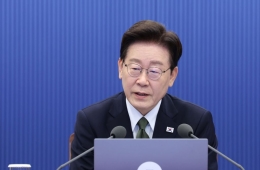
Kim Sang-hee, Member of the Democratic Party of Korea (Vice Speaker of the National Assembly)
View original imageThe problem is that the KCSC is responsible for directly handling lawsuits related to broadcasting review or supporting lawsuits of the related institution, the Korea Communications Commission. The fact that the KCSC operates as a private independent organization is also a measure to ensure independent review and sanctions of broadcasting and communication content. In fact, in June, a former lawyer employee immediately took a job at a general programming broadcasting station that had been previously reviewed for legal sanctions, causing controversy. This employee worked at the KCSC as a non-permanent contract employee for 12 years and 9 months since 2008.
Regarding this, the KCSC stated, "We do not have separate internal regulations regarding employment restrictions for retirees, nor are we considering any amendment plans."
Hot Picks Today
 "Only 3 Passengers on a 180-Seat Flight"... The Shocking State of the 'Honeymoon Hotspot'
- "Work That Took a Month Now Done in Just 8 Hours"…Samsung and LG Turn to AI to Counter China's Pursuit
- "Returning Excess Fees Collected Under Previous Administration"...$680 Per Person Refund for 950,000 Americans
- "Such chaos for the first time in 140 years"... Even illnesses surge, Tokyo stunned by 'unbelievable' event
- "Nothing Left to Buy, Feeling Indifferent"... 'Rich Daughter' Vibe in Department Stores with 'Hyunbaek Core'
Kim Sang-hee said, "Although the KCSC performs public duties of reviewing and sanctioning broadcasting and communication, it seems problematic that employment screening for staff turnover is not conducted because it is a private organization. To prevent conflicts of interest in work and strengthen the fairness of public duties, it is necessary to expand the employment screening target to include employees at grade 4 or higher."
© The Asia Business Daily. All rights reserved. Unauthorized AI training and use prohibited.