Rising Yangju Okjeong New Town Residential Supply Nears Completion... Anticipation for Large-Scale New Residential Complexes Like Rapiano
![[Photo by Yangju Okjeong New Town Layout Map (Provided by LH)]](http://www.asiae.co.kr/news/img_view.htm?img=2021071510315135350_1626312712.jpg)
Rapid Price Increase in Yangju Okjeong New Town This Year... Factors Include Expansion of Transportation Network and Infrastructure
Interest in housing complexes in the Seoul metropolitan area remains high this year, especially in regions where residential facility supply is nearing completion. This is because most living conditions such as transportation networks and lifestyle infrastructure are well established, and the limited supply volume leads to concentrated demand from buyers.
This phenomenon is particularly evident in land development districts adjacent to Seoul within the metropolitan area, with recent strong interest in Yangju Okjeong New Town. Contrary to concerns that housing prices would fall and unsold units would surge after its designation as a real estate adjustment target area in June last year, Yangju City's housing prices reversed within about a year and have shown the opposite trend as of June this year.
Yangju Okjeong New Town is the northernmost among the second phase new towns in the metropolitan area and is also the largest in scale. The total area is approximately 11.42 million square meters, planned to accommodate about 60,000 housing units and a population of around 160,000. Apartments first began occupancy in 2014. The straight-line distance to downtown Seoul is about 30 km. Due to the absence of a subway line to Seoul, it was overlooked in the housing market.
As a result, it was designated as a managed unsold housing area in February last year but was lifted from this status in February this year, just one year later. At that time, the number of unsold units in the area surged from about 330 units to approximately 630 units in November last year but drastically decreased by nearly 97% to fewer than 20 units in February this year. The housing price increase rate recorded 6.58% in the first quarter from January to March this year, far surpassing Seoul's 1.10% increase rate.
The primary factor behind this rapid rise is transportation improvements. Yangju had been undervalued as a 'public transportation underserved area' with few public transit lines besides Subway Line 1, but recent transportation developments have improved accessibility. Additionally, it has been highlighted as one of the few places in the metropolitan area where housing prices had not risen, making it an attractive residential area for actual homebuyers.
Currently, the GTX-C line, for which the project implementer was selected last month and development is about to begin in earnest, has confirmed Deokjeong Station on Line 1 as a stop, and there are ongoing efforts to include Yangju Station as well. Furthermore, the subway Line 7 extension plan directly connecting to Okjeong New Town (scheduled to open in 2024) is also a significant positive factor.
Okjeong New Town Housing Complex Supply Nearing Completion... Attention on Large-scale Townhouse Complex Sales
In fact, after the inclusion of Okjeong New Town in the Line 7 extension plan at the end of last year, housing prices around the planned station sites began to soar. The 84㎡ unit (exclusive area) of ‘e-Pyeonhansesang Okjeong Edu Summit’ in Okjeong-dong sold for 595 million KRW on the 25th of last month, rising by 145 million KRW from 450 million KRW in October last year before the plan announcement. The ‘Okjeong Central Park Prugio’ saw its highest sale price for a 59㎡ unit increase by 145 million KRW over eight months from 320 million KRW in October last year to recently 465 million KRW.
Real estate experts view this price increase as a likely ‘price alignment’ phenomenon, where Okjeong New Town’s housing prices, initially cheaper than other outer metropolitan areas, rise to levels similar to other second phase new towns as residential conditions improve due to transportation benefits.
Synergy with nearby Yangju Station area complexes and Deokjeong New Town is also attracting attention. The formation of a ‘Yangju City residential belt’ connecting these adjacent areas is expected to integrate living zones. Moreover, with future transportation network expansions and infrastructure developments such as the nearby Yangju Techno Valley, Yangju City is anticipated to function as a residential hub, increasing expectations.
Currently, housing complex sales in Okjeong New Town are in the final stages. Most of the multi-family housing sites have been developed, and some units were sold earlier this year. Recently, there has been growing interest among actual buyers in complex-type detached houses and townhouse sites actively progressing in the area.
These are large-scale complex housing sites remaining in Okjeong New Town, where almost no new residential facility sites remain. They are mainly located in the western part of Okjeong New Town, surrounded by natural environments such as Dokbawi Park, offering forested areas, and are noted for convenient access to National Road No. 3.
Currently, developer RBDK’s detached house brand Rapiano plans to launch sales in the second half of this year. Rapiano has successfully developed large-scale complex housing projects multiple times in Gimpo Hangang New Town, Paju Unjeong New Town, Goyang Samsong District, and Incheon Cheongna International City, and plans to present its residential philosophy ‘masterpiece’ in Yangju Okjeong New Town as well.
Hot Picks Today
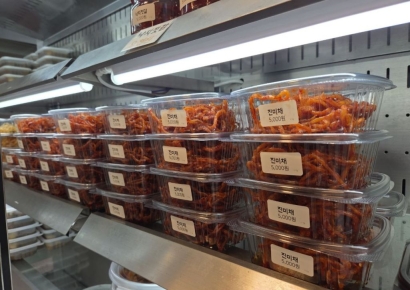 "Auntie, When Will Dried Shredded Squid Return as a Side Dish?"...Once Vanished from Restaurants, Now Making a Comeback
- Monthly Salary Soars 3.7 Times from 8.25 Million Won to 30.59 Million Won... 86 Fair Trade Commission Retirees Join Law Firms Over 10 Years
- "Wait a Little Longer, Honey"... Why Samsung Electronics and SK hynix Employees' Parental Leave Rates Dropped Simultaneously
- Aiming for 22 Trillion Won with Just One Ring: The Secret Behind the Valuation Is 'Data' [Weekend Money]
- "V and Go Yoonjung Wear Them Too"... The Transformation of the ‘Grandma Ring’ Captivates Foreigners [K-Holic]
Other developers and construction companies are also expected to introduce complex-type housing with distinctive brands and specialized designs, making Yangju Okjeong New Town one of the largest eco-life complex townhouse communities in the metropolitan area, garnering high expectations.
© The Asia Business Daily. All rights reserved. Unauthorized AI training and use prohibited.