Designation of Gimpo and Busan as Regulated Areas Including 'Hae·Su·Dong'... "Spread of Balloon Effect"
![[Image source=Yonhap News]](http://www.asiae.co.kr/news/img_view.htm?img=2020112319423926706_1606128159.jpg)
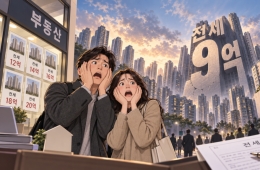
[Asia Economy Reporter Yuri Kim] After the government designated Gimpo City and Busan's 'Hae·Su·Dong (Haeundae-gu, Suyeong-gu, Dongnae-gu)' as regulated areas on the 19th of last month, apartment prices in these areas have stalled, while housing prices in neighboring regions have risen more than threefold. Due to supply shortages, low interest rates, and abundant liquidity, market expectations remain high, leading to a balloon effect in nearby areas excluded from the regulated zones.
The newly designated regulated areas as of the 19th of last month include Gimpo in Gyeonggi Province (excluding Tongjin-eup, Wolgot, Haseong, and Daegot-myeon), Busan's Haeundae, Suyeong, Dongnae, Yeonje, and Nam districts, and Daegu's Suseong-gu.
According to the weekly apartment price trend survey for the first week of December (as of the 7th) released by the Korea Real Estate Board, Gimpo City, which was included in the regulated areas, saw a 0.32% increase. This is 2.41 percentage points lower than the 2.73% increase recorded in the third week of November (as of the 16th), before the designation. In contrast, Ilsan Seo-gu, which avoided regulation, saw its increase rate rise more than threefold from 0.31% to 0.97% during the same period.
The 'Ilsan Doosan We've the Zenith' in Tanhyeon-dong, Ilsan Seo-gu, which was once unsold, recorded a new high price of 750 million KRW for a 95㎡ (exclusive area) unit on the 1st. Currently, asking prices have risen to 900 million KRW.
The balloon effect was also significant within Busan. The apartment price increase rate in Haeundae-gu was 1.39% in the third week of November before the designation but dropped to 0.26% in the first week of December. Similarly, the increase rates in Suyeong-gu (1.34%→0.34%), Dongnae-gu (1.13%→0.33%), Yeonje-gu (0.89%→0.37%), and Nam-gu (1.19%→0.53%) all slowed down.
On the other hand, areas excluded from the regulated zones, mainly in the western Busan region, experienced a significant balloon effect. Gangseo-gu, which has expectations for the development of an international new city, rose 0.21% in the third week of November but surged 1.32% in the first week of December, increasing more than sixfold. Saha-gu, which benefits from many transportation improvements, also saw its increase rate jump from 0.23% to 0.79%, more than tripling. Other areas such as Buk-gu (0.2%→0.78%) and Sasang-gu (0.23%→0.72%) also experienced large increases.
Additionally, Paju City recorded a 1.18% increase in apartment prices in the first week of December, Ulsan Nam-gu 1.15%, and Changwon-si Seongsan-gu in Gyeongnam 1.15%, all showing balloon effects due to being outside the regulated areas.
The balloon effect is also evident in the subscription market. 'Doosan We've the Zenith Central Saha,' which opened its model house on the 4th, saw weekend reservations (for the 5th and 6th) fully booked within about an hour of pre-visit reservations opening. A sales official said, "Due to COVID-19, we limited pre-visit reservations to 50 people per day, but weekend reservations for two days were completed in just over an hour," adding, "There should be no problem with the first priority subscription deadline on the 15th."
Hot Picks Today
 "Auntie, When Will Dried Shredded Squid Return as a Side Dish?"...Once Vanished from Restaurants, Now Making a Comeback
- "Is It Right to Pay This Much on a Fixed Salary?"... Seoul Ranks 1st or 2nd Globally for Smartphone Fees
- Iran Leaves Room for Talks Despite Trump's Rejection of 'Seven-Day Plan'... "Waiting for Official U.S. Stance"
- Already 1,000 Examined, Stirring Up Protest: "Why Go to the Army When We Said No?" Students Rally in the Streets
- "Is the Dermatology Clinic Near My Home Affected Too?... Where Have All the Resigned Residents Gone?"
Yang Ji-young, director of Yang Ji-young R&C Research Institute, pointed out, "As causes of market instability such as supply shortages remain unresolved, demand suppression measures may only cause balloon effects in other regions."
© The Asia Business Daily. All rights reserved. Unauthorized AI training and use prohibited.