As Seoul Apartment Prices Soar, Attention Turns to New Complexes in Nearby Gyeonggi Region

Despite the government's strong regulations, apartment prices in Seoul continue to rise, drawing attention to apartments in the neighboring Gyeonggi Province. Although administratively part of Gyeonggi-do, these areas are close to Seoul, making commuting to major business districts easy. Residents can directly or indirectly benefit from various development projects in Seoul, and regulations are relatively less strict, reducing the financial burden on buyers.
According to data from Real Estate 114, as of July, the average price per apartment household in Seoul surpassed 1 billion KRW, reaching 1,002.96 million KRW. This is an increase of over 120 million KRW compared to a year earlier (August 2019), when the average was 882.78 million KRW. Since August 2017, when government regulations were intensively applied, the average apartment price per household in Seoul has risen by 49% (from 669.99 million KRW to 1,002.96 million KRW), which is twice the average increase rate of 22% (from 326.27 million KRW to 399.35 million KRW) in Gyeonggi and Incheon during the same period. Furthermore, with the recent shortage of jeonse (long-term lease) apartments in Seoul, buyers are facing increased financial pressure, making it harder to purchase a home.
As a result, demand is concentrating on apartments in areas close to Seoul in the pre-sale market. According to data from the Korea Real Estate Agency, in June, Hyundai Engineering & Construction's “Hillstate Uijeongbu Station” in Uijeongbu-dong, Uijeongbu-si, Gyeonggi Province, attracted 4,789 applicants for 102 units, recording a competition rate of 46.95 to 1. This complex offers convenient access to Seoul’s Dobong-gu and Gangbuk-gu via Subway Line 1.
In July last year, the GS Engineering & Construction consortium's “Gwangju Station Jayeon & Xi” in Yeokdong, Gwangju-si, Gyeonggi Province, saw 7,363 applicants for 208 units, achieving a competition rate of 35.4 to 1. This complex allows travel to Seoul’s Gangnam area within 30 minutes via the Gyeonggang Line at Gwangju Station.
Consequently, cases of purchasing apartments in Gyeonggi Province adjacent to Seoul are also increasing. According to Real Estate 114 data, in Gwangju-si, which is adjacent to the Gangnam area, the number of apartments purchased from Seoul in June was 110 units, about seven times higher than a year earlier (16 units). In Bucheon-si, which borders Seoul’s Gangseo-gu and Yeongdeungpo-gu, the number of apartments purchased from Seoul in June this year increased about fourfold compared to June last year (69 units to 269 units).
An industry insider said, “With Seoul apartment prices steadily rising and loans becoming more difficult due to regulations, buyers are turning their attention to areas bordering Seoul.” They added, “With the recent jeonse shortage, many Seoul tenants are showing strong interest in newly built apartments in nearby Gyeonggi Province, so competition for new apartment sales in Seoul-adjacent Gyeonggi areas is expected to intensify.”
For Seoul residents planning to buy a home this year, targeting newly built complexes in nearby Gyeonggi areas is advisable. Hyundai Engineering & Construction plans to launch “Hillstate Samdong Station” in Samdong 1 District, Gwangju-si, Gyeonggi Province, in August. “Hillstate Samdong Station” will consist of seven buildings ranging from five basement floors to 20 above-ground floors, with a total of 565 units sized between 63 and 84 square meters.
“Hillstate Samdong Station” is a transit-oriented complex within walking distance of Samdong Station in Gwangju-si. From Samdong Station, it takes 5 minutes (one stop) to reach Imae Station in Bundang and 8 minutes (two stops) to reach Pangyo Station. Additionally, from Pangyo Station, passengers can transfer to the Shinbundang Line and reach Gangnam Station in six stops, enabling quick access not only to Bundang and Pangyo but also to Seoul’s Gangnam area. Therefore, residents can easily utilize the living infrastructure of Bundang, Pangyo, and Gangnam.
The road network is also well developed. The complex is adjacent to Gyeongchung-daero, providing easy access to Seongnam IC, Icheon-si, and Hanam-si via National Route 3, and to Yongin and Hanam-si via National Route 45. There are also various express bus routes to Gangnam, Yangjae, and Songpa areas, making it possible to commute to the Gangnam area by bus.
Hot Picks Today
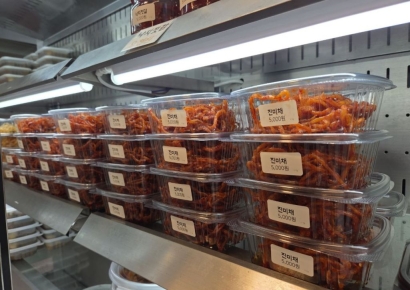 "Auntie, When Will Dried Shredded Squid Return as a Side Dish?"...Once Vanished from Restaurants, Now Making a Comeback
- Monthly Salary Soars 3.7 Times from 8.25 Million Won to 30.59 Million Won... 86 Fair Trade Commission Retirees Join Law Firms Over 10 Years
- Foreign Inflows to U.S. Stocks Hit Record High with Net Purchases of KRW 1,280 Trillion Over One Year
- "They Thought They Hit the Jackpot: Thieves Steal Nvidia-Branded Trailer, Flee After Discovering Only Sand Inside"
- "V and Go Yoonjung Wear Them Too"... The Transformation of the ‘Grandma Ring’ Captivates Foreigners [K-Holic]
A Hyundai Engineering & Construction sales official stated, “Hillstate Samdong Station is located in the Samdong Station development district currently underway in Gwangju-si, making it a place with promising future value.” They added, “Because it offers fast and easy access to Bundang, Pangyo, and Gangnam areas, it is expected to be highly preferred by workers commuting to these regions. Also, apartment prices around the station area in Gwangju-si are rising sharply, which is likely to attract strong interest from investors.”
© The Asia Business Daily. All rights reserved. Unauthorized AI training and use prohibited.