[War & Business] The Imo Incident and the Jeonse Crisis

Photograph of houses in the Bukchon area of Hanyang during the late Joseon Dynasty [Image source: Seoul History Compilation Institute/http://historylib.seoul.go.kr]
View original image[Asia Economy Reporter Hyunwoo Lee] The Imo Incident of 1882 was the first event in Korean history where the king's royal guard rebelled due to unpaid wages and even stormed the palace. The soldiers had not received their salaries for 13 months, and when they were finally paid, it was in rice mixed with husks and sand, which enraged the troops and led to what was seen as a spontaneous uprising.
However, what truly drove the soldiers to rebellion was the hardship caused by the housing rental crisis intertwined with the wage arrears. At that time, housing prices and rental deposits (jeonse) in Hanyang were soaring, but the government had not paid the soldiers for over a year, pushing those about to be evicted from their jeonse homes into a desperate situation. Jeonse contracts typically lasted one year, and soldiers without income for 13 months found themselves homeless in Hanyang, which triggered the uprising.
The housing shortage in Hanyang was already severe at that time. Soldiers of the royal guard, responsible for protecting the capital and the palace, had to live near the palace, so they needed to rent jeonse homes in Hanyang. However, finding jeonse housing was nearly impossible. Hanyang was originally planned as a city for around 100,000 people, but by then the population had exceeded 500,000, causing a severe housing shortage. The sale price of thatched houses around Jongno, Seoul, rose from about 1,500 nyang in 1852 to 2,500 nyang in 1862, a 66% increase over ten years. During the same period, the price of rice, a measure of inflation at the time, rose by only about 1%. This means housing prices in Hanyang had skyrocketed far beyond general inflation.
Moreover, high-ranking officials frequently invested in Hanyang real estate, buying thatched houses and remodeling them into tiled houses, inflating prices by more than double. Since 1754, whenever housing prices were discussed in the court, the government issued bans on house sales and jeonse contracts to curb price increases, but these efforts were insufficient. The royal family itself fueled the price surge.
Hot Picks Today
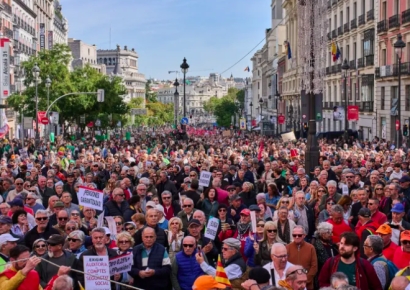 "They're Coming After My Pension Too?" Public Unease Mounts... Spain Sees Mass Protest Over Reform Push
- "Where Do You Go Every Lunch Break?"... 'Time-Poor' Men in Their 40s: Where They Spend Their Money.
- "Do Zero-Sugar Drinks Control Blood Sugar?" ... No "Helps Suppress Blood Sugar Spikes" Claim If Sweeteners Are Used
- "Naked Again?" Controversial Actress Crosses a Line... Slammed for Sexualizing 'Child Characters'
- "A Really Beautiful Butt"... How Did Nicki Minaj React to Trump's Unexpected Remark?
When princes or princesses held weddings, the royal family purchased nearby houses at prices more than three times the market rate to build secondary palaces as wedding gifts. Whenever news of a royal wedding spread, land prices inevitably soared. Just before the Imo Incident in 1881, Crown Prince Sunjong's wedding took place, and King Gojong built a lavish secondary palace in Anguk-dong for his son's marriage, which further enraged the soldiers. Beyond livelihood issues, the common people were angered by the hypocritical behavior of the Confucian monarchy and scholars who had preached frugality and modest living as virtues for over 500 years.
© The Asia Business Daily. All rights reserved. Unauthorized AI training and use prohibited.